
What Are the Different Types of Cleanroom Doors?
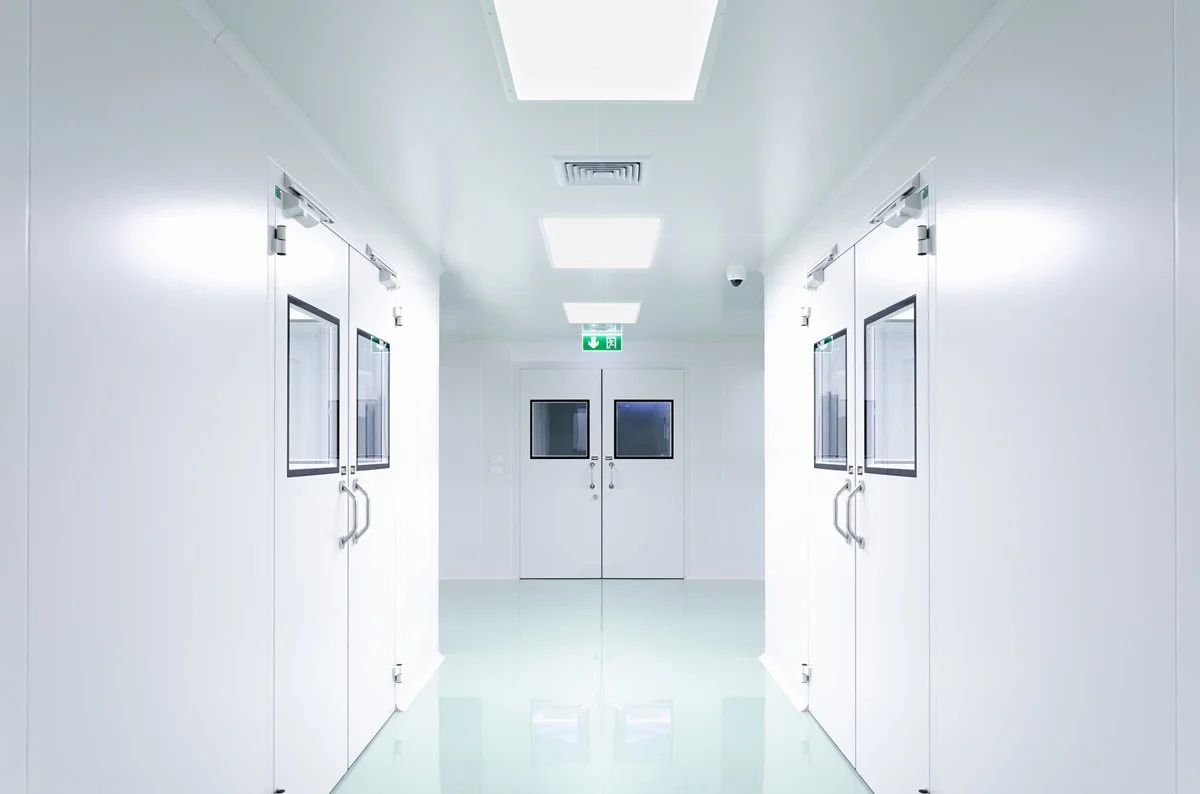
Cleanroom doors are specially designed entry systems that help maintain strict environmental controls in accordance with ISO 14644. These doors directly influence contamination control, airflow management, pressure differentials, and the operational flow in your workspace.
To preserve the low particulate counts in your cleanroom, you need the right door. The challenge is that there are several types of cleanroom doors, which can make selecting the appropriate option a bit difficult. Should you install a standard hinged door, or opt for a sliding setup? Are there specialty alternatives available to accommodate more traffic and larger equipment?
These are some of the questions cleanroom operators ask when building or revamping an existing workspace. So, what are the different types of cleanroom doors? Our guide unpacks the primary options available, as well as some specialty configurations, so that you can identify the right fit for your clean environment.
Cleanroom Door Roles in Contamination Control
Cleanroom doors serve two primary functions. First, they act as a physical seal that prevents external contaminants from entering your controlled space. The doors must seal properly using sweeps, gaskets, or an airtight design to maintain the appropriate cleanliness levels.
Second, cleanroom doors provide traffic management. Your doors regulate how people and materials move through the workspace. Poorly designed access points can disrupt airflow or introduce contamination.
Cleanroom doors may or may not be made from the same materials as cleanroom walls. While both surfaces need to be easy to sanitize, cleanroom doors have to open and close. They also serve several other important functions and act as the sole access point to your clean workspace.
Common types of cleanroom doors you’ll encounter are:
Hinged
Sliding
Airlock & pass-through
Specialty
There isn’t a one-size-fits-all option for cleanrooms. The types of cleanroom doors you install should be based on your industry, the level of cleanliness you need to maintain, and the volume of traffic you need to accommodate. A simple hinged cleanroom door may suffice for most applications, but certain industries require a larger entryway to move equipment in and out of the space.
Types of Cleanroom Doors
Here are the most common cleanroom door types:
Hinged Cleanroom Doors
Hinged cleanroom doors are the most traditional and widely used option. These doors function like standard swing doors and are available in single-leaf or double-leaf configurations. You should consider a hinged setup for a low- to moderate-traffic area where there is enough swing space. Common examples include gowning rooms and corridors.
Advantages of hinged cleanroom doors include:
Simple and durable
Easy to install
Low maintenance
Reliable sealing
Cons are as follows:
Space required to swing open
Can disrupt airflow
Less efficient in high-traffic areas
If your top priorities are simplicity and reliability, a hinged door is tough to beat.
Sliding Cleanroom Doors
Sliding doors move horizontally along a track and are available in both manual and automatic configurations. These are ideal for high-traffic areas or facilities with limited space. Advantages include:
Space-saving design with no swing radius
Reduced airflow disruption during use
Can be automated for touchless entry
Limitations are as follows:
Higher upfront investment
More complex installation and maintenance
Track systems must be kept clean to prevent particle buildup
Sliding doors are a popular option for maintaining airflow stability and making the most of your space. You will also have a larger opening for bringing in equipment and materials.
Airlock & Pass-Through Doors
Airlock and pass-through door systems create a controlled transition space between cleanroom zones. These systems only allow one door to be opened at a time to maintain pressure differentials and minimize the risk of contamination. These systems are commonly used in pharmaceutical manufacturing, biotech labs, and semiconductor facilities.
Advantages include:
Much lower risk of cross-contamination
Strict environmental separation
Compliant with high cleanroom classifications
Limitations are:
More complex workflows
Training required
Higher installation costs
Potential bottlenecks in high-paced operations
If contamination control is non-negotiable, airlock systems are the most comprehensive solution available.
Specialty Cleanroom Doors
Specialty cleanroom doors are designed to address specific access challenges. Options include:
Bi-Parting Doors: Quickly open from the center to reduce exposure time; commonly used in high-traffic environments
Vision Window Doors: Feature integrated viewing panels, which improve safety and coordination with your team and reduce unnecessary door cycling
Blast or Explosion-Rated Cleanroom Doors: Reinforced to withstand pressure events and often required in certain pharmaceutical/chemical applications, as they promote safety in hazardous environments
There are also different types of sealing options available, such as gaskets, brushes, or sweeps. These devices can help you create a tighter seal and minimize the risk of cleanroom contamination.
How to Choose the Right Cleanroom Door Type
When comparing the types of cleanroom doors, you should:
Match to your cleanroom class and traffic pattern
Identify layout constraints, such as swing space
Determine whether automation is necessary
Factor in maintenance, cost, and the lifecycle of the door
You should also consider which setup will work best with your style of cleanroom. For example, a hardwall cleanroom may be able to support a larger, heavier door compared to a softwall cleanroom.
If you are designing a new cleanroom or overhauling an existing one, it’s important to choose a configuration that can accommodate the type of door you need. For example, if you need bi-parting doors for larger equipment or a higher volume of foot traffic, make sure the front-facing walls can accommodate this design.
Source Cleanroom Doors From CleanAir Solutions
Understanding the different types of cleanroom doors will help you design a space that maintains cleanliness while promoting efficiency. Each door type offers unique advantages depending on your facility’s needs. When making a selection, your priorities should be:
Contamination control
Layout
Long-term performance
CleanAir Solutions offers several different types of cleanroom doors. Our professionals can help you identify the right option for your industry and clean environment configuration. Contact us to learn more or explore our selection of cleanroom doors.